01
Useful strength at low mass
Aluminium alloys provide a strong strength-to-weight proposition for moving assemblies, building systems, frames, and structural components.
Material guide
Aluminium combines low mass, useful strength, corrosion resistance, finish flexibility, recyclability, and the ability to form efficient, application-specific cross-sections.
Material advantages
The alloy, temper, profile geometry, finish, fabrication method, and service environment work together. No single property should be selected in isolation.
Aluminium alloys provide a strong strength-to-weight proposition for moving assemblies, building systems, frames, and structural components.
A naturally forming oxide layer supports corrosion resistance. Alloy, finish, exposure, and maintenance still need application-specific review.
Mill finish, anodizing, powder coating, and other coordinated finishes can address appearance, surface durability, and project context.
Extrusion can integrate channels, ribs, hollows, screw ports, fins, and interfaces into one continuous profile.
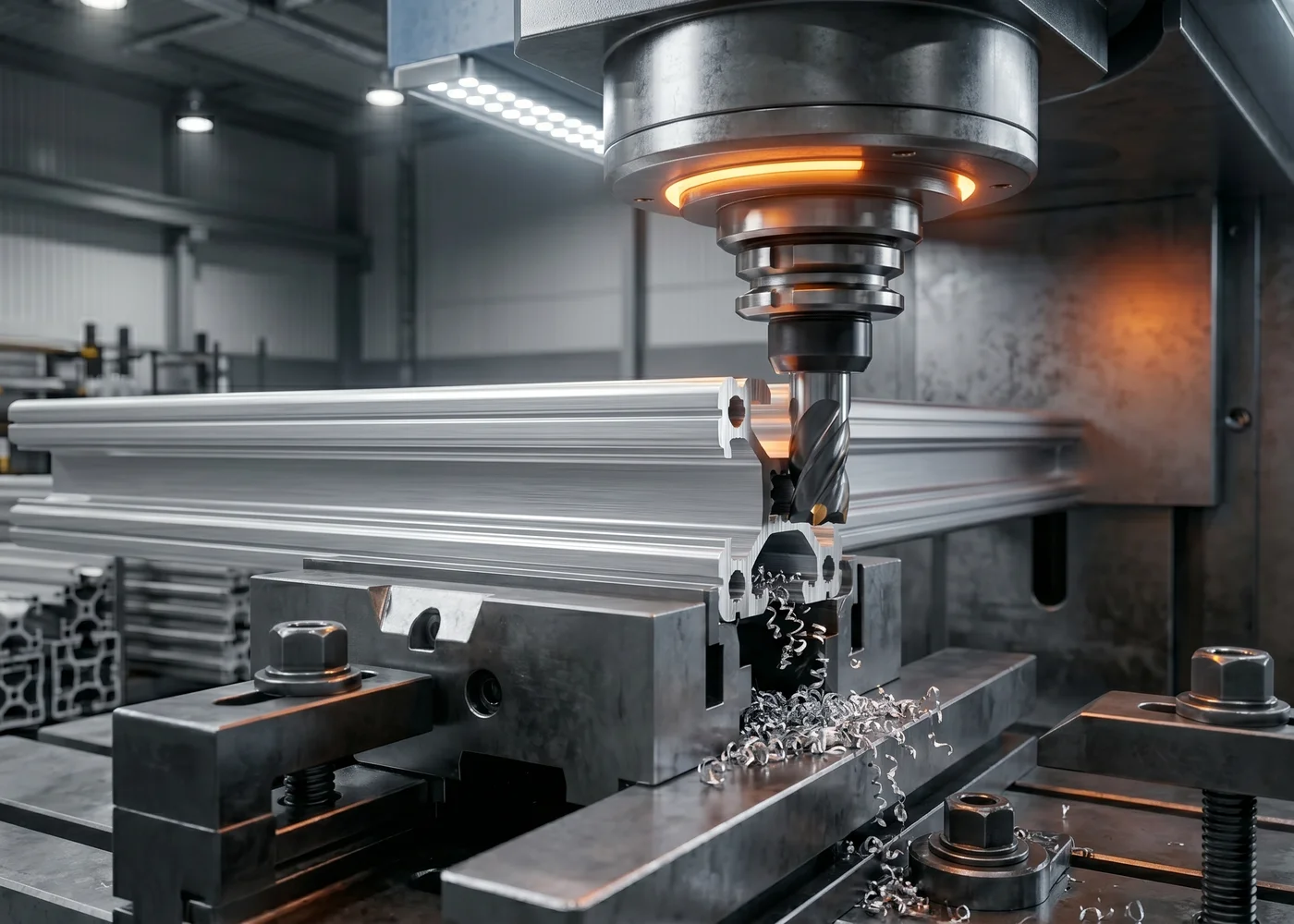
Profiles can be cut, drilled, tapped, machined, joined, and assembled, subject to alloy, temper, geometry, and process requirements.
Aluminium can be recycled and returned to useful material cycles. Actual environmental outcomes depend on sourcing, design, recovery, and processing.
Design opportunity
Extrusion can replace assemblies of separate parts by building functional geometry into one profile. The right design can support alignment, fastening, drainage, heat transfer, sealing, cable routing, or modular connection.
Material in practice
Aluminium delivers the most value when design, finish, fabrication, and supply are considered as one system. These principles help turn a material advantage into a profile that works in the real assembly.
Place material where stiffness, fastening, sealing, or alignment matter. Ribs, webs, and hollow chambers can make a section efficient without relying on a one-size-fits-all strength claim.
Visible faces, exposure, colour, texture, and joining method influence the finish route and the way a profile should be handled after extrusion.
Cutting, drilling, tapping, machining, bending, and assembly allowances are easier to coordinate when they are considered with the cross-section instead of added at the end.
Low mass can simplify handling and transport, while aluminium's recyclability creates recovery potential when collection and processing are organized.
Selection checklist
What must the section support, resist, or span?
Will it face moisture, chemicals, heat, UV, or outdoor exposure?
Which fasteners, seals, panels, hardware, or mating parts must connect?
Will it be cut, drilled, tapped, welded, bent, or machined?
Which visible surfaces, color, texture, and finish consistency matter?
What lengths, quantities, packing, timing, and repeat-order pattern are expected?
Apply the material
Browse standard profile families or share a drawing and application brief for a custom extrusion review.