Buying guides
Custom Aluminium Extrusion Die Design: A Buyer's Checklist
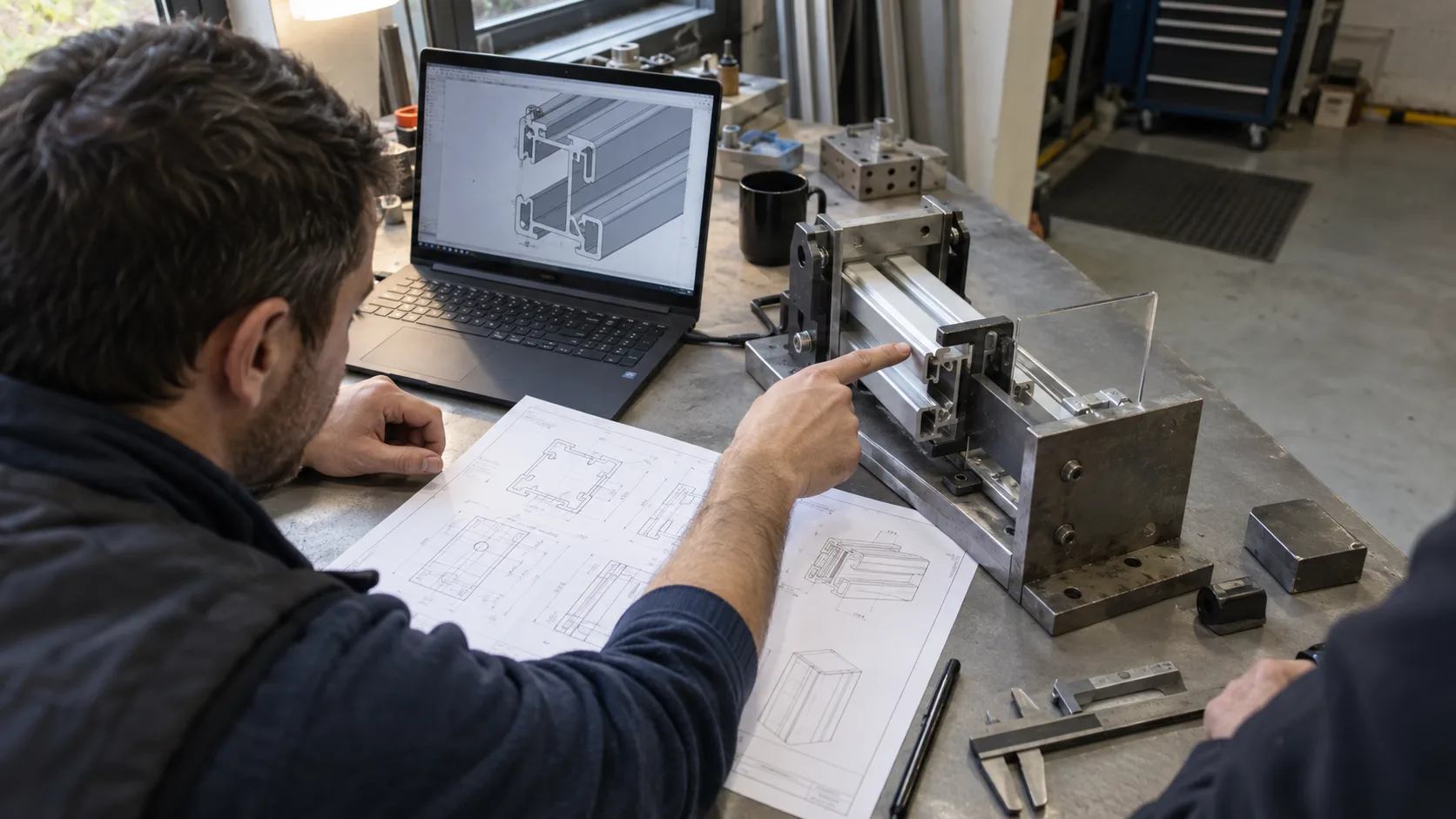
A custom aluminium profile drawing can contain the right overall dimensions while leaving the most important feature unclear. A fastener channel, seal groove or mounting face may determine whether the part works in the assembly. A useful die-development discussion begins with those functions and the full cross-section.
This checklist explains what to review before committing to a custom aluminium extrusion die. It gives engineering and procurement teams a practical way to prepare drawings for Omalco, identify open design decisions and agree how the first sample will be assessed.
At a glance
- Explain the function of the profile and identify the geometry fixed by mating parts or application requirements.
- Review walls, transitions, corners and tolerances with the extruder instead of assuming universal design limits.
- Link tooling release, trial acceptance and repeat orders to the same controlled drawing revision.
Start with the function of the custom aluminium profile
Show the component in its assembly as well as in cross-section. Identify the interfaces that matter: a mating extrusion, cover, seal, fastener or mounting surface. Tell the manufacturer which features are fixed by that interface and which can be reviewed during development.
For example, a channel intended to retain a specific nut needs more context than an outside-width dimension. Include the nut reference, the relevant interface dimensions and the approved assembly requirements. This lets the design discussion focus on a working connection while keeping the full profile geometry visible.
Review wall thickness, radii and transitions
The Aluminum Extruders Council's design guidance recommends attention to wall consistency, smooth transitions and rounded corners when reviewing extrusion efficiency. It also explains that complex shapes need a discussion with the extruder. A general design guide is a starting point for that review, rather than a universal manufacturing limit.
Mark any wall or radius that is controlled by the application and identify where a change could be considered. Ask the manufacturer to explain proposed changes against the function. Keep structural or assembly requirements with the responsible designer while the extrusion team reviews the proposed manufacturing route.
Identify functional features and visible faces
A profile can include ribs, grooves, chambers and other features for a particular assembly. Label their purpose on the design brief. This helps distinguish a critical interface from a decorative feature, and it gives a proposed geometry change a clear reason to be accepted or rejected.
Also mark visible faces and the intended finish. A custom architectural section may need a different appearance discussion from a concealed equipment member. Put those requirements on the drawing or an associated controlled specification so tooling, trial inspection and finish review refer to the same brief.
Specify tolerances for the finished component
Identify the dimensions that control assembly and agree the relevant tolerances and inspection method. Include cut length, straightness or other geometric requirements where they are specified for the order. Ask whether a critical feature will be assessed as extruded or after a further operation.
For a component with holes, threads or machined faces, connect the extrusion drawing to the finished-part drawing. State the locating surfaces and processing sequence required by the design. This allows the quotation and sample plan to address the component you will assemble, including any agreed secondary operations.
Compare an existing profile with a new extrusion die
Ask whether an existing section can meet the approved requirement before deciding on new tooling. Compare the complete proposed route: geometry, further processing, material, finish, sample approval and commercial quantities. A familiar catalogue section and a custom profile should be assessed against the same finished-part need.
For a new die, agree the tooling scope, ownership or use terms, trial responsibilities and any revisions needed after the first review. Request the stages relevant to your drawing. A tooling price and a general lead-time statement leave the approval work unclear unless the sample and release process is also defined.
Approve the trial against a controlled drawing
Set the trial acceptance plan before production release. Identify the dimensional checks, material records, assembly evaluation and finish reference required for the component. Name the person who can approve the result and record any change to the drawing or specification made during the review.
Omalco's drawing-led custom extrusion route can start with the section, application and expected quantity. Add your material condition, finish, further operations and delivery location to that enquiry. For repeat orders, reference the accepted revision and sample so the earlier development work remains usable.
- Full cross-section, drawing revision, units and the intended application.
- Mating parts, functional features, visible faces and specified tolerances.
- Material condition, finish and finished-component processing requirements.
- Tooling terms, trial checks, approval owner and repeat-order references.
Frequently asked questions
What is the minimum wall thickness for a custom aluminium extrusion?
The proposed section needs an extrusion review. Alloy, geometry, feature arrangement, application and manufacturing route affect feasibility. Share the full drawing and requirements with Omalco rather than relying on a universal wall-thickness figure.
Do custom aluminum profiles always need a new extrusion die?
The supplier can first review whether an existing section meets the approved requirement. A new geometry may need new tooling. Confirm the specific section, tooling route and trial plan before placing the order.
Can I start an Omalco enquiry with a sample or sketch?
Share the sample details or sketch with dimensions, application and mating-part information. The requirement still needs an agreed drawing and specification before tooling or production release. Identify which details need further technical review.
Sources and further reading
References reviewed on 28 October 2026. These explain general principles and published offerings; confirm the material, processing and supply requirements for your particular profile.
Further technical reading
- Custom aluminium extrusion profiles
- Material selection resources
- Trial inspection and quality assurance
About the publisher
Omalco manufactures aluminium profiles and custom extrusions from its Behror base. Our journal helps buyers prepare technical enquiries and compare supply requirements. Learn about Omalco.