Application guides
Solar Panel Aluminium Frames vs Mounting Rails: A Buyer's Guide
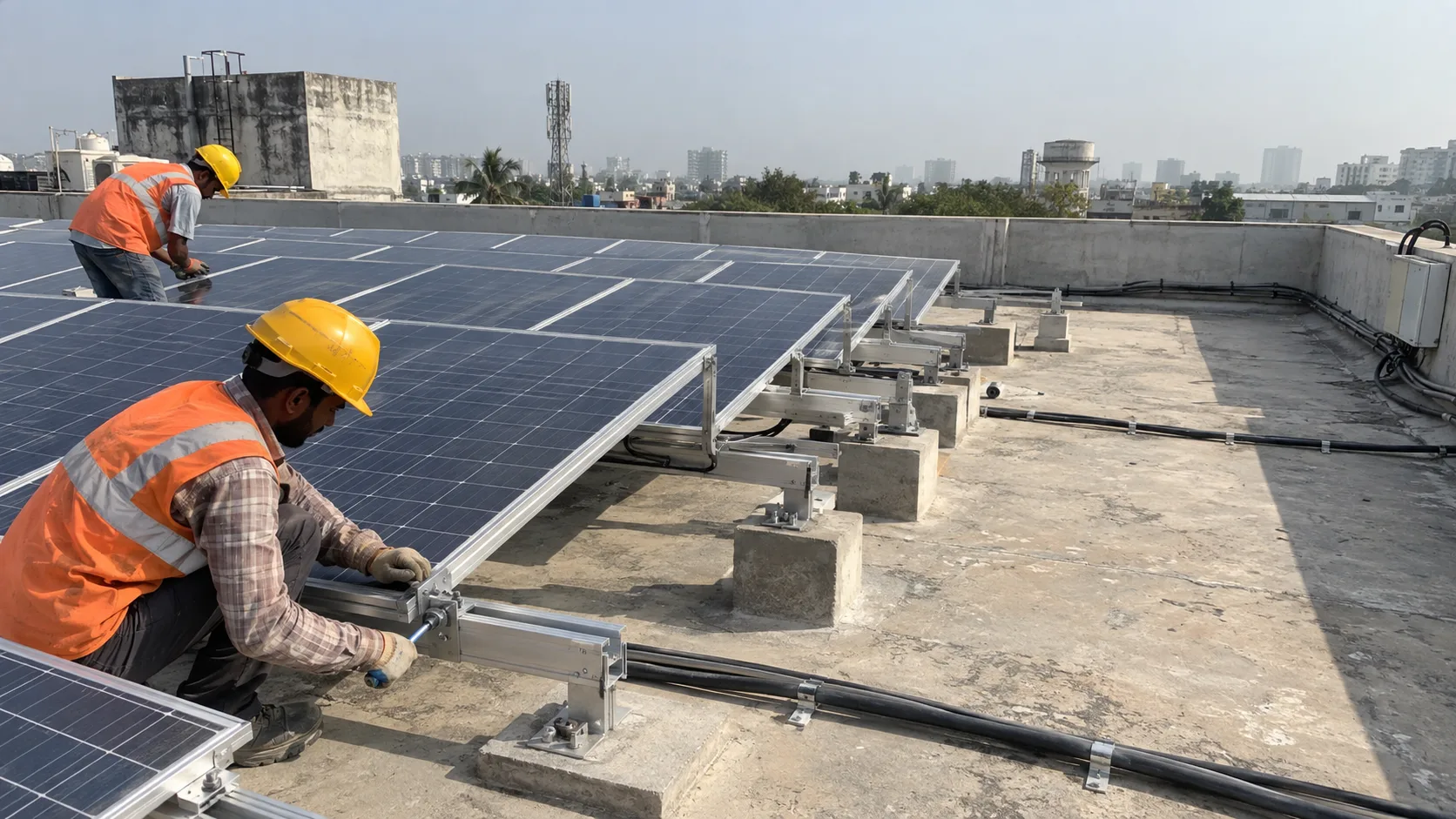
A request for solar aluminium profiles can refer to the perimeter of a photovoltaic module, the rails beneath it or connecting components in the mounting assembly. Those parts have different drawings and interfaces. Treating them as one generic solar frame can leave a quotation incomplete.
This guide explains the distinction between solar panel aluminium frames and mounting rails. It helps module-component buyers and solar procurement teams prepare a clearer enquiry for Omalco's solar and structural profile range, while retaining the references approved for the complete system.
At a glance
- Identify module frames, mounting rails and connecting components as separate items.
- Use the exact module and mounting-system references to define their interfaces.
- Supply approval is tied to the component drawing; structural and installation requirements belong to the approved system design.
What is the difference between a module frame and a rail?
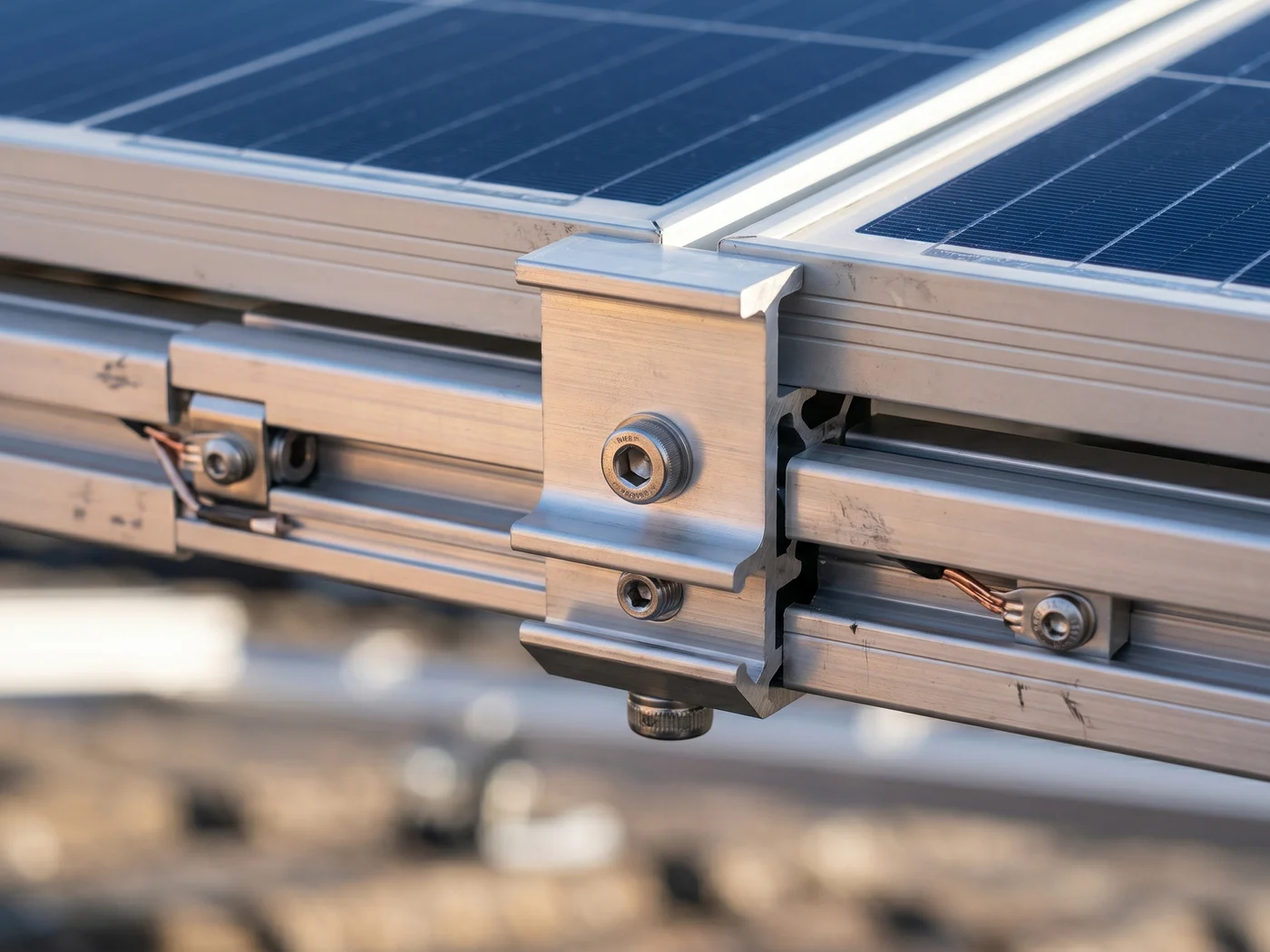
For a framed module, the aluminium perimeter is part of the module assembly. A mounting rail belongs to the support arrangement onto which modules are fixed. Clamps and other connectors join specified parts of that arrangement. The exact geometry and permitted connections depend on the selected products and design.
Hydro's solar mounting overview describes extruded profiles within mounting systems. Module manufacturers also publish product-specific installation instructions. Read those references together with the approved component drawings when defining which aluminium parts your enquiry covers.
| Component | Typical position or role | Main reference to provide |
|---|---|---|
| Module frame | Perimeter member of a framed photovoltaic module | Module manufacturer's frame drawing and requirements |
| Mounting rail | Support member within the mounting assembly | Approved rail drawing and mounting-system reference |
| Clamp or connector | Interface between specified assembly components | Compatible parts and approved connection detail |
Specify solar panel aluminium frame extrusions
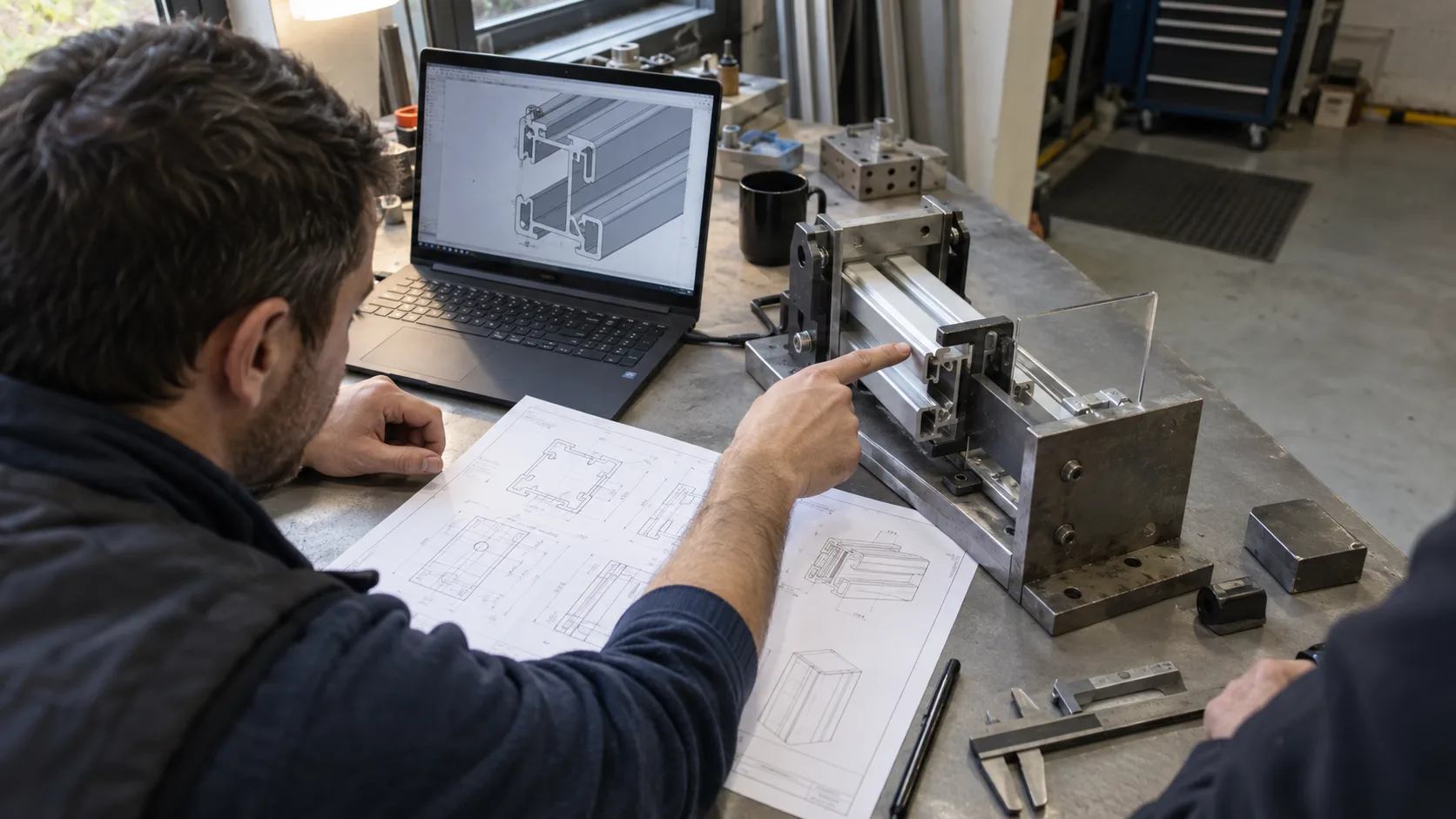
For a module-frame enquiry, obtain the current section drawing from the module specification owner. Identify the mating corner or joining components, cut lengths, required operations and finish. Keep the part code and revision visible on each line of the schedule so long and short members can be distinguished.
A module's overall size does not describe the frame cross-section. The enquiry needs the interfaces that matter to the module assembly and its approved mounting arrangement. Record who approves the trial component and which checks or documents must accompany the supplied profiles.
Coordinate mounting rails with clamps and connectors
For a solar mounting rail, show the fastener channels and mating components on the approved drawing. Include the required cut lengths, holes or slots and the condition in which the rail is supplied. Ask the manufacturer to review the full section, including any feature that controls connector fit.
Module installation manuals can limit the permitted connection arrangement for the specific product. The Trina Solar reference below is one example, rather than a universal installation instruction. Use the current manual for your exact module and the project-approved mounting design to establish the actual requirements.
Keep material, surface and system requirements together
State the alloy, temper, finish and inspection requirements specified for each component. A rail and a module-frame member need not have identical material or processing requirements. If the supplier proposes a change, refer it to the responsible specification owner before accepting it into the order.
Also identify any specified electrical-bonding, contact-surface or interface requirements that affect processing. Provide the relevant approved detail rather than leaving it to be inferred from a colour or surface-treatment name. The quotation should describe the component's supplied condition and any further operations included.
Build a component schedule for solar-profile procurement
Separate frames, rails and connecting profiles into their own order lines. For each, list the part reference, drawing revision, quantity, length, material condition and finish. Add machining or cutting requirements where they are part of the supply scope, and identify the agreed sample or inspection evidence.
This schedule helps the receiving team distinguish components that may look similar in bundles. Agree labels and packing with the supplier, including any need to keep a project phase or component set together. Confirm the delivery location and the proposed dispatch scope against the same schedule.
Discuss solar aluminium extrusion profiles with Omalco
Omalco lists solar and structural sections among its aluminium profile families. For solar frame extrusions, mounting rails or a custom section, send the approved component drawing and order schedule. Include the delivery location and identify open material, finish or processing questions for review.
A buyer searching for a solar aluminium profile manufacturer in India can use that information to assess a defined supply proposal. Ask Omalco to confirm the available section or tooling route and the proposed inspection scope. Keep the complete system's engineering and installation approval connected to its own project references.
Frequently asked questions
Are solar panel aluminium frames and mounting rails interchangeable?
They serve different roles and have different interface requirements. Use the approved component drawing and system reference for each item. A module-frame section should not be identified as a rail merely because both are aluminium profiles.
Can one aluminium profile suit every solar module?
Check the exact module and mounting-system requirements. Component dimensions, permitted connections, material and project conditions need to be reviewed against the approved design. Generic solar-profile terminology does not define a compatible assembly.
What should a solar aluminium profile enquiry include?
Provide part drawings and revisions, the module or mounting-system reference, specified material and finish, lengths, quantities, further operations, inspection needs and the delivery location. Identify the owner of any component or system approval still required.
Sources and further reading
References reviewed on 28 October 2026. These explain general principles and published offerings; confirm the material, processing and supply requirements for your particular profile.
Further technical reading
- Solar and infrastructure applications
- Custom extrusion and die development
- Secondary-operation enquiries
About the publisher
Omalco manufactures aluminium profiles and custom extrusions from its Behror base. Our journal helps buyers prepare technical enquiries and compare supply requirements. Learn about Omalco.