Profile fundamentals
Types of Aluminium Profiles and Where They Are Used
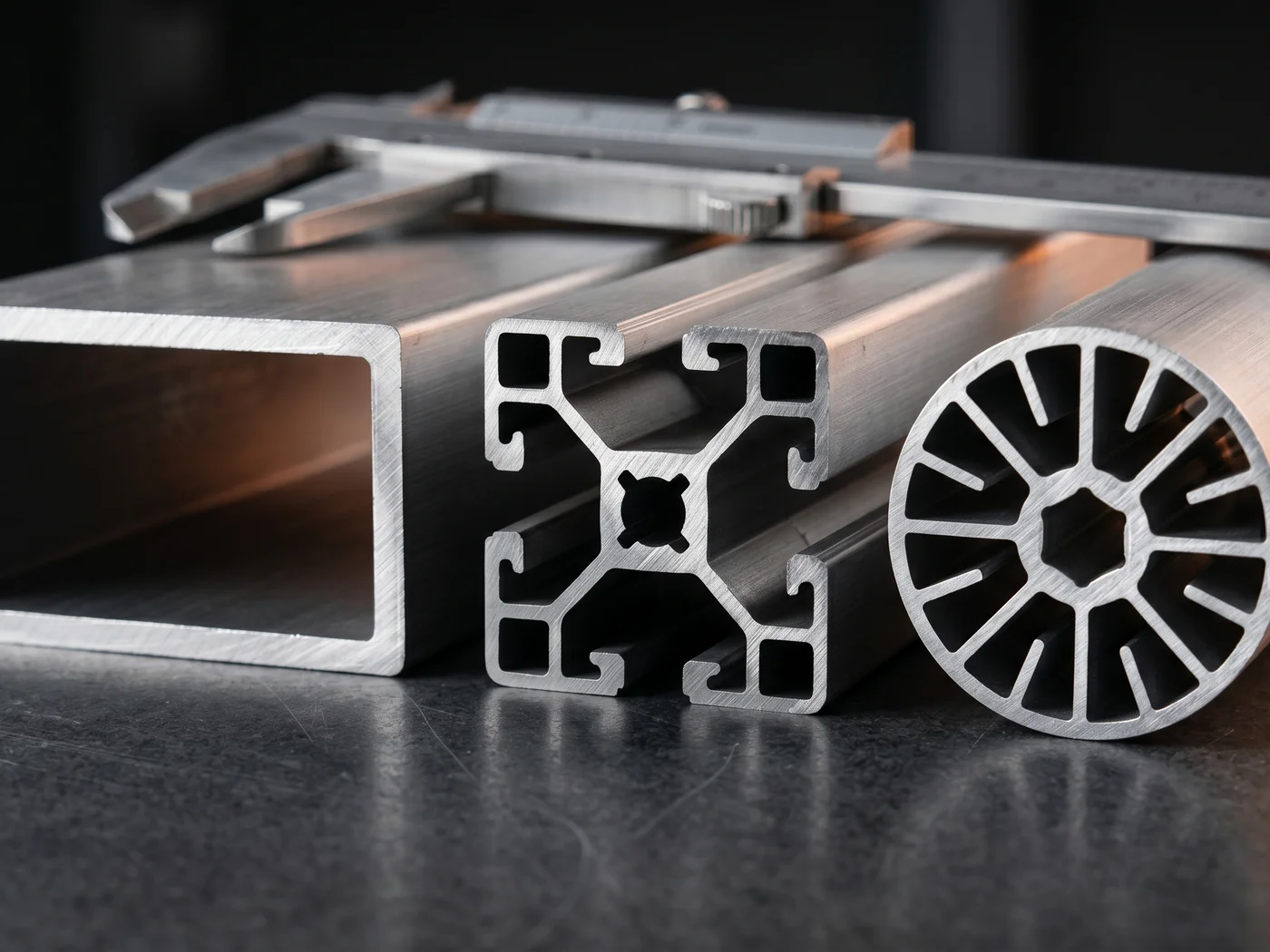
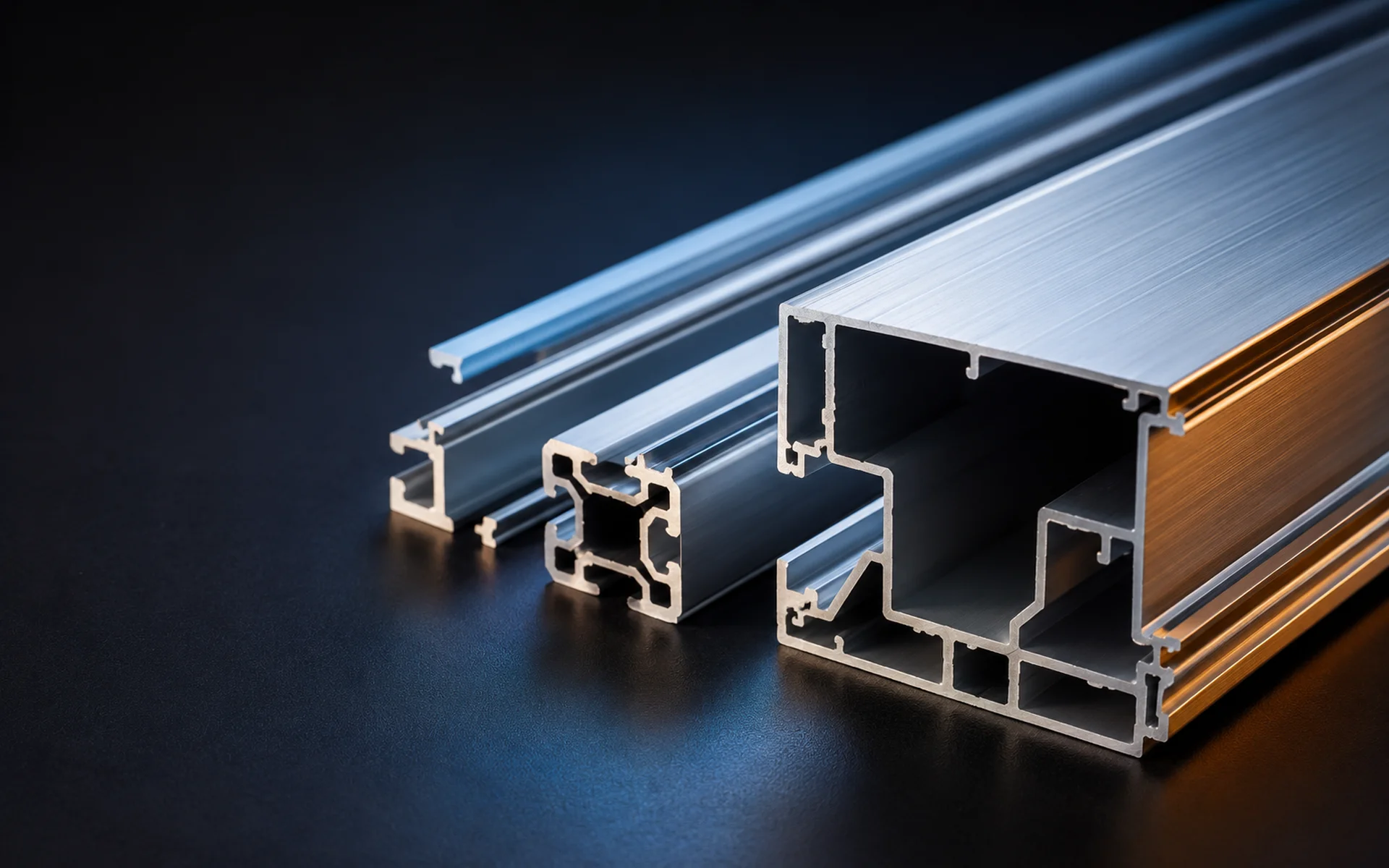
Aluminium profiles can be described by their shape, by their application or by both. An angle describes geometry. A window-frame section describes a role in an assembly. A custom aluminum profile is developed around a particular drawing. Understanding those labels helps you search a catalogue and explain what you need without treating similar-looking parts as interchangeable.
This guide groups common profile types and shows what to check before ordering. Omalco's aluminium profile catalogue is a useful next step when you have identified the family, while a drawing enquiry is the better starting point for a specific custom component.
At a glance
- A generic shape name does not identify the dimensions, material or performance of a section.
- Application profiles must be checked against the mating parts and system they belong to.
- Compare an existing catalogue section with a custom extrusion against the complete finished-part requirement.
Angles, channels, bars and other simple sections
Simple profile names usually describe an outline. An angle has two legs, a channel has a web and flanges, and a flat bar has a rectangular section. These names make an initial catalogue search easier, but they leave important questions open: leg lengths, wall thickness, corner details, length and dimensional tolerances.
Suppose a fabricator needs a channel around an existing panel. The internal opening and clearance at the panel can matter more than the outside width shown in a photograph. Describe the panel, the intended assembly and the dimensions that control the fit. Ask the supplier to confirm the exact section code before placing the order.
Hollow sections and profiles with detailed geometry
A hollow profile encloses a space in its cross-section, as a rectangular tube does. More detailed sections may combine chambers, ribs, slots and projecting features. Those features have to be considered together when an extrusion manufacturer reviews the design; an outline that can be drawn is not automatically ready for tooling.
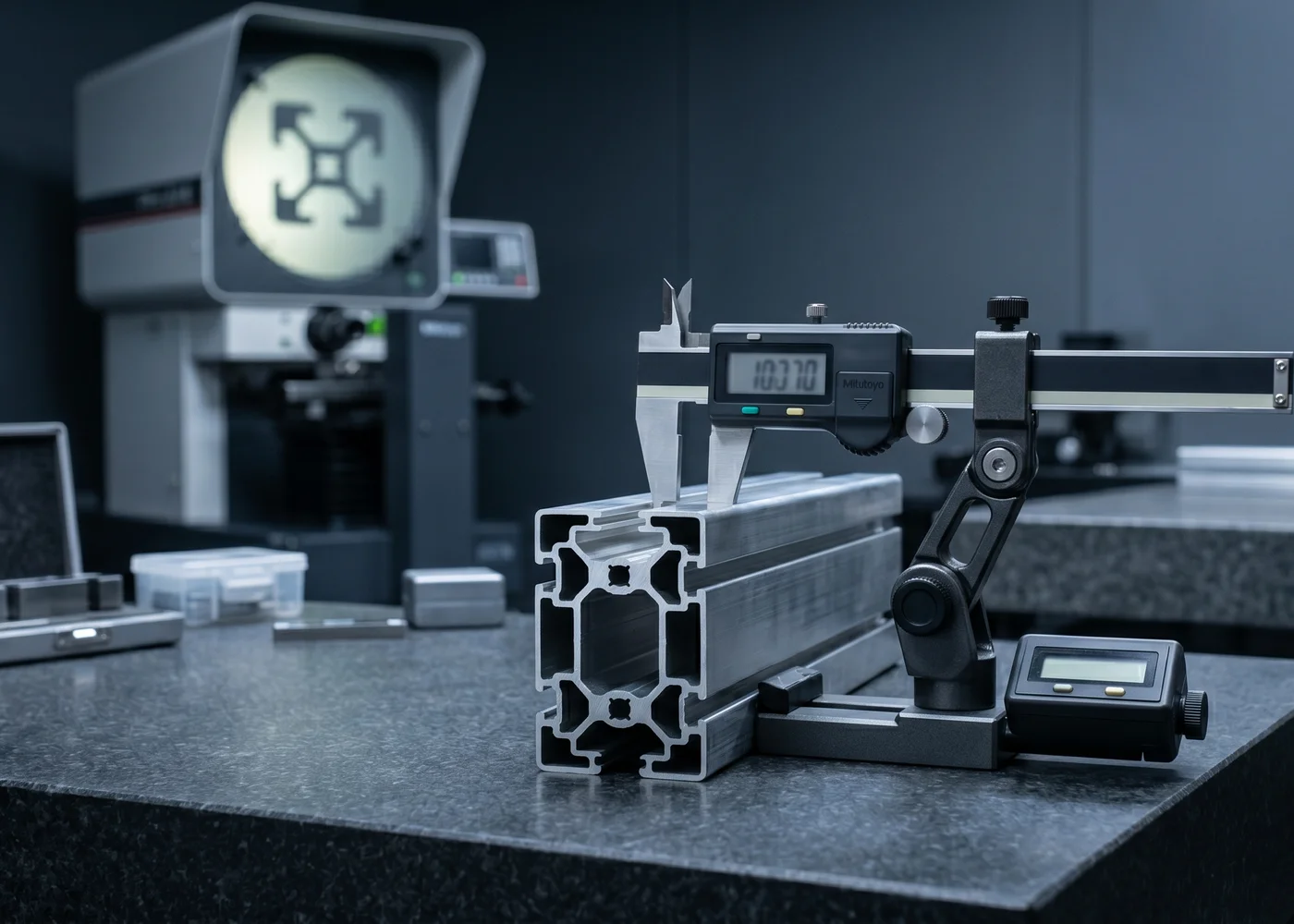
Show the whole cross-section when requesting a review. Cropping the drawing to one groove can hide the wall or chamber connected to it. Mark the mating surfaces and explain which features are functional, decorative or available for adjustment. Keep the final geometry under one approved drawing revision.
Architectural aluminium profiles for buildings
Architectural profiles are identified by their role in a building assembly. Common enquiries include window and door sections, facade members, partition profiles, trims and louvre sections. Omalco's architectural aluminium profile range is organised around these application families so buyers can move from a project requirement to the relevant catalogue.
Keep matching sections together in your enquiry. A window frame may need a particular sash, bead and interlock; a facade component may interface with brackets, seals and other members. The project designer or system provider confirms the assembly requirements. The extrusion supplier then needs the approved section schedule and supply specification.
Solar, equipment and OEM aluminium profiles
A solar-frame profile, an equipment rail and a heat-sink extrusion may all be aluminium profiles, but the useful specification differs. A frame member has interfaces and joining details; an equipment component may need machining; a heat-sink design has thermal and mounting requirements. Name the application before choosing from a similar-looking section.
For an OEM enquiry, include the part in context: the assembly drawing, mating component, further operations and acceptance requirements. For solar components, use the approved component schedule and project specification. A profile supplier's quotation establishes the proposed material and processing scope; the relevant engineering approval establishes suitability for the system.
Standard vs custom aluminium profiles
A catalogue profile can be a practical option when its dimensions and supplied condition meet the requirement. A custom extrusion is worth discussing when the part needs a particular interface or geometry. Avoid choosing either route on the profile name alone: compare the finished part, any additional operations and the approvals needed.
For example, a standard channel followed by machining and a custom section with an integrated feature are two proposals to investigate. Request the tooling scope, trial route, quantities and further processing for each. Omalco can review your custom aluminium profile requirement against the drawing instead of relying on a generic shape description.
Build a profile schedule before asking for a price
For a mixed order, give each profile its own line. Use a drawing or section code, length, finish and quantity for that item. A single total weight does not tell an aluminum extrusion manufacturer how many different dies or sections are involved, or how the material needs to be packed and identified.
Link the schedule to the current drawings and label the required delivery location. This gives Omalco a clearer basis for reviewing the product family, open technical points and quotation scope. It also gives your receiving team a reference when checking the supplied sections against the order.
Frequently asked questions
Are all aluminium channels interchangeable?
No. Check the exact geometry, internal clearances, thickness, tolerances, alloy, temper and finish. A channel that looks similar can behave differently in an assembly or fail to fit the mating part.
Does custom aluminium extrusion always require a new die?
The supplier should first review whether an existing approved section meets the drawing. A different geometry may require new tooling. Confirm die availability, tooling terms and the trial approval route for the actual requirement.
Which aluminium profile types does Omalco manufacture?
Omalco's published product families include architectural systems, door and window sections, industrial profiles, solar components and custom extrusions. Share the section code or drawing to confirm the proposed supply scope for your order.
Sources and further reading
References reviewed on 22 October 2026. These explain general principles and published offerings; confirm the material, processing and supply requirements for your particular profile.
Further technical reading
- Omalco aluminium profile catalogue
- Custom extrusion and tooling review
- Estimate quantities with the profile weight calculator
About the publisher
Omalco manufactures aluminium profiles and custom extrusions from its Behror base. Our journal helps buyers prepare technical enquiries and compare supply requirements. Learn about Omalco.